
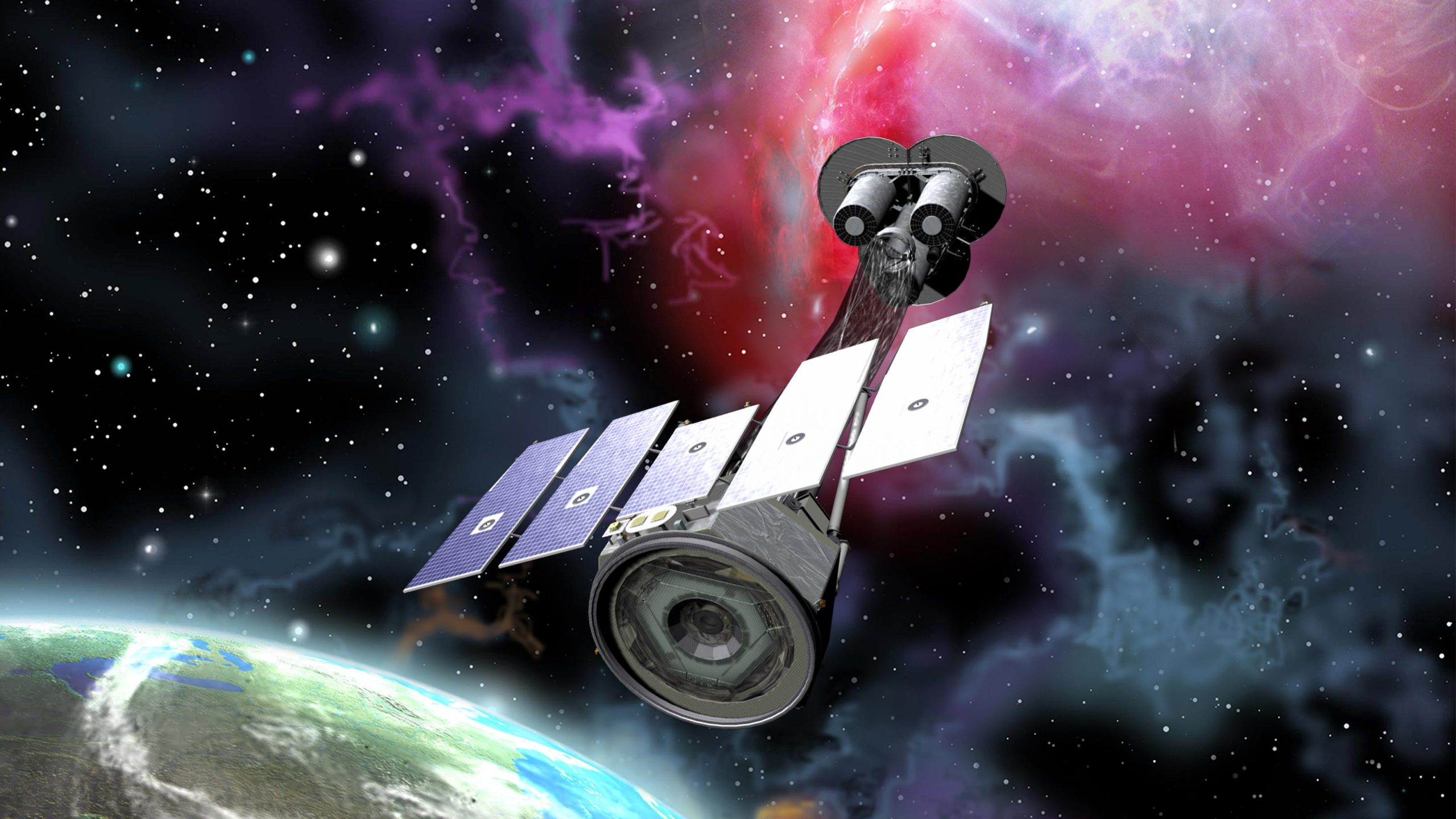
Researchers introduce an imaging X-ray polarimetry mission that enables new measurements of cosmic X-ray sources.
Humankind has long been fascinated by the secrets hidden in the immense expanse of outer space. The invention of the optical telescope during the 17th century allowed humans to see stars appearing as mere twinkling dots in the night sky. Thanks to scientific innovations over the next four centuries, we can now launch telescopes into space to get a better look at astronomical objects and even study them at wavelengths beyond the visible spectrum. The Imaging X-ray Polarimetry Explorer (IXPE) launched by NASA on December 9, 2021, is one such expedition into the cosmos.
The IXPE is a space-based observatory developed in collaboration with the Italian Space Agency (ASI). It contains three identical telescopes, each with an imaging X-ray detector sensitive to light polarization at its focus. Equipped with these, IXPE can explore some of the brightest cosmic X-ray sources in our universe, such as pulsars, black holes, and neutron stars. With a 2-year baseline mission, IXPE will start off by studying dozens of X-ray sources in its first year, which will be followed by more detailed observations of the chosen targets in the second year.
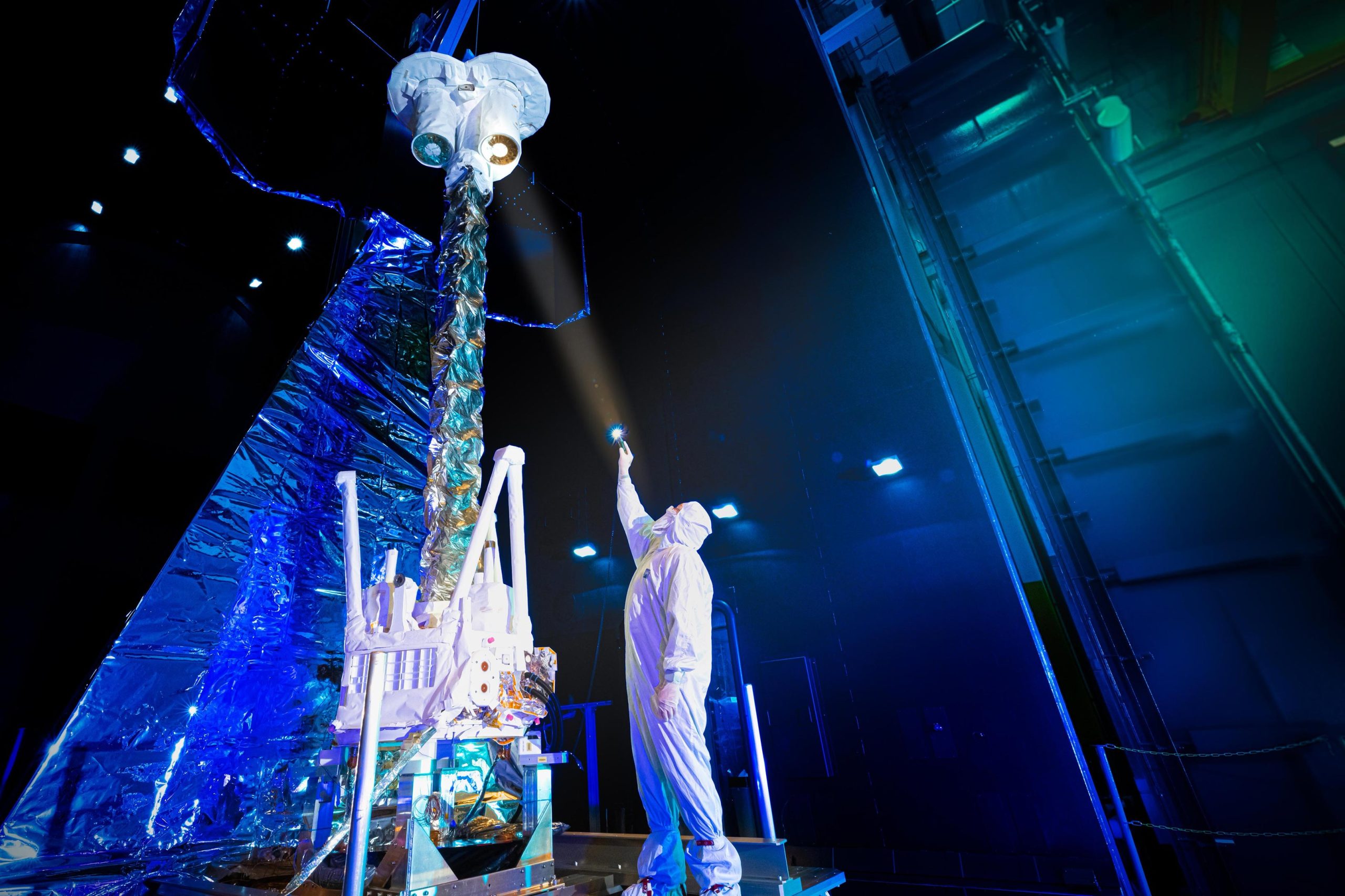
Conceived in 2017, this multi-national project became a reality in 2021 owing to the participation of several space agencies that came together to realize different aspects of the mission. A recent article published in the Journal of Astronomical Telescopes, Instruments, and Systems provides a detailed description of the optics and detectors of IXPE and the scientific goals of the mission.
IXPE was launched on a reusable Falcon 9 rocket from the Kennedy Space Center into an equatorial orbit at an altitude of 600 km. This orbit was chosen to reduce the charged-particle background, maximize the lifetime of the explorer and allow easier regular data downloads to primary and backup ground stations (Kenya and Singapore, respectively). The observatory uses an array of 12 sun sensors, a three-axis magnetometer, and two star trackers to maintain its course in space.
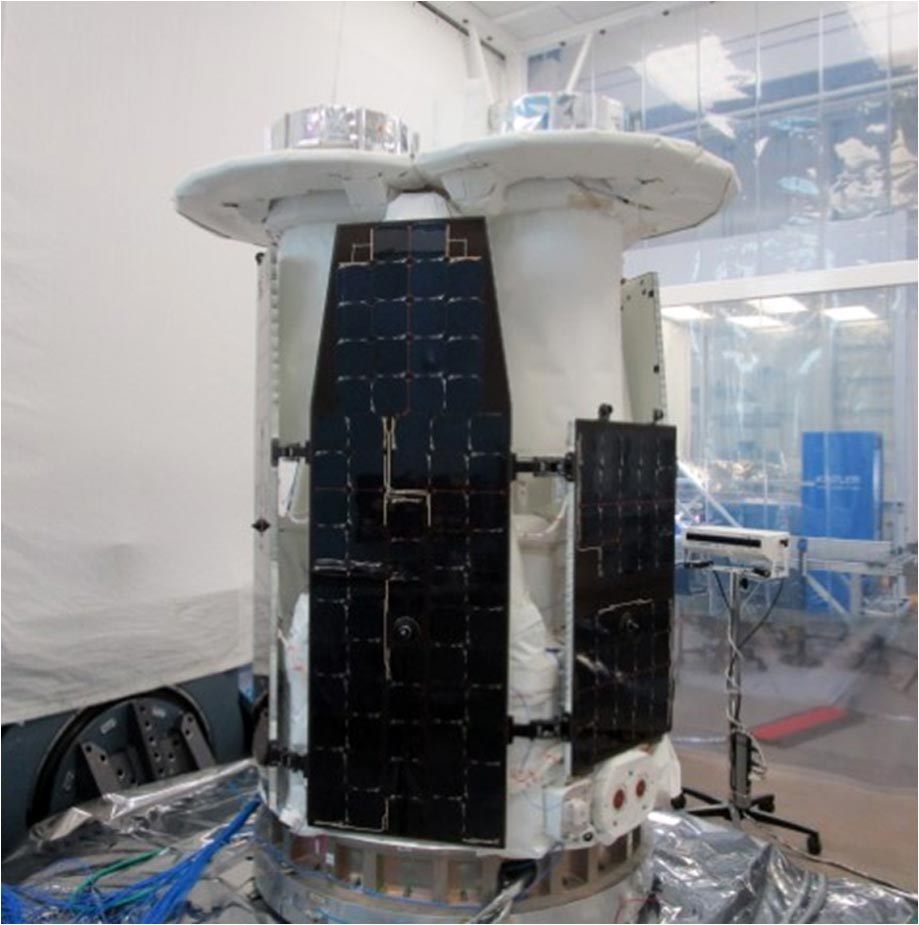
Telescope Design and Functionality
Each telescope in the IXPE observatory comprises a mirror module assembly (MMA). The MMA focuses X-rays into polarization-sensitive detector units (DUs). The DUs, in turn, help in energy and position determination by providing timing information and polarization sensitivity data. The information collected by the DUs is relayed to the detector service unit (DSU), which processes the data and transmits it to the ground. A lightweight, coilable boom is deployed after launch to ensure the correct focal length and to align the MMAs with the DUs. Additionally, a tip-tilt-rotate mechanism exists on board, which can be used to align the mirrors with the detectors as well.
After the initial stages of alignment and calibration, IXPE began its baseline mission, providing high-quality polarization data of various sources. The first imaging data was reported in February. The IXPE team expects that the most striking early images will likely come from the remnants of shell-type supernova (a supernova that emits most of its radiation from a shell of shocked material). They believe that IXPE will also be able to image active galaxies, the galactic center of the Milky Way galaxy, and “blazars,” a type of galaxy that emits powerful jets of ionized matter and radiation. This will provide an opportunity to push the envelope of observations even further by exploring new source types of particular interest to gain physical insights.
“The astrophysics community has been looking forward to this capability — IXPE opens a new window on the X-ray sky by providing orders of magnitude higher sensitivity than previous X-ray polarimeters in space,” said Megan Eckart, deputy editor for JATIS.
A marvel of science and engineering, IXPE will provide the first information about X-ray polarization for many astronomical sources. With its state-of-the-art telescopes and detectors, IXPE has the potential to expand the horizons of our knowledge about the universe.
Reference: “Imaging X-ray Polarimetry Explorer: prelaunch” by Martin C. Weisskopf, Paolo Soffitta, Luca Baldini, Brian D. Ramsey, Stephen L. O’Dell, Roger W. Romani, Giorgio Matt, William D. Deininger, Wayne H. Baumgartner, Ronaldo Bellazzini, Enrico Costa, Jeffery J. Kolodziejczak, Luca Latronico, Herman L. Marshall, Fabio Muleri, Stephen D. Bongiorno, Allyn Tennant, Niccolo Bucciantini, Michal Dovciak, Frédéric Marin, Alan Marscher, Juri Poutanen, Pat Slane, Roberto Turolla, William Kalinowski, Alessandro Di Marco, Sergio Fabiani, Massimo Minuti, Fabio La Monaca, Michele Pinchera, John Rankin, Carmelo Sgrò, Alessio Trois, Fei Xie, Cheryl Alexander, D. Zachery Allen, Fabrizio Amici, Jason Andersen, Angelo Antonelli, Spencer Antoniak, Primo Attiná, Mattia Barbanera, Matteo Bachetti , Randy M. Baggett, Jeff Bladt, Alessandro Brez, Raffaella Bonino, Christopher Boree, Fabio Borotto, Shawn Breeding, Daniele Brienza, H. Kyle Bygott, Ciro Caporale, Claudia Cardelli, Rita Carpentiero, Simone Castellano, Marco Castronuovo, Luca Cavalli, Elisabetta Cavazzuti, Marco Ceccanti, Mauro Centrone, Saverio Citraro, Fabio D’Amico, Elisa D’Alba, Laura Di Gesu, Ettore Del Monte, Kurtis L. Dietz, Niccolò Di Lalla, Giuseppe Di Persio, David Dolan, Immacolata Donnarumma, Yuri Evangelista, Kevin Ferrant, Riccardo Ferrazzoli, MacKenzie Ferrie, Joseph Footdale, Brent Forsyth, Michelle Foster, Benjamin Garelick, Shuichi Gunji, Eli Gurnee, Michael Head, Grant Hibbard, Samantha Johnson, Erik Kelly, Kiranmayee Kilaru, Carlo Lefevre, Shelley Le Roy, Pasqualino Loffredo, Paolo Lorenzi, Leonardo Lucchesi, Tyler Maddox, Guido Magazzu, Simone Maldera, Alberto Manfreda, Elio Mangraviti, Marco Marengo, Alessandra Marrocchesi, Francesco Massaro, David Mauger, Jeffery McCracken, Michael McEachen, Rondal Mize, Paolo Mereu, Scott Mitchell, Ikuyuki Mitsuishi, Alfredo Morbidini, Federico Mosti, Hikmat Nasimi, Barbara Negri, Michela Negro, Toan Nguyen, Isaac Nitschke, Alessio Nuti, Mitch Onizuka, Chiara Oppedisano, Leonardo Orsini, Darren Osborne, Richard Pacheco, Alessandro Paggi, Will Painter, Steven D. Pavelitz, Christina Pentz, Raffaele Piazzolla, Matteo Perri, Melissa Pesce-Rollins, Colin Peterson, Maura Pilia, Alessandro Profeti, Simonetta Puccetti, Jaganathan Ranganathan, Ajay Ratheesh, Lee Reedy, Noah Root, Alda Rubini, Stephanie Ruswick, Javier Sanchez, Paolo Sarra, Francesco Santoli, Emanuele Scalise, Andrea Sciortino, Christopher Schroeder, Tim Seek, Kalie Sosdian, Gloria Spandre, Chet O. Speegle, Toru Tamagawa, Marcello Tardiola, Antonino Tobia, Nicholas E. Thomas, Robert Valerie, Marco Vimercati, Amy L. Walden, Bruce Weddendorf, Jeffrey Wedmore, David Welch, Davide Zanetti and Francesco Zanetti, 14 April 2022, Journal of Astronomical Telescopes, Instruments, and Systems.
DOI: 10.1117/1.JATIS.8.2.026002
Never miss a breakthrough: Join the SciTechDaily newsletter.
Follow us on Google and Google News.